Have you ever asked yourself why you do not look like your brother or sister, yet you have the same parents? The answer is in your DNA. DNA is genetic material, and it is more or less like a recipe book, which makes you what you are. In the case of siblings being born, they receive various portions of the DNA recipe book of their parents. That is why you may be having your mom with her eyes and your sister with the smile of your dad. We shall discuss the process of DNA sharing among siblings and its implications for families.
What is the genetic science estimate of the level of DNA shared by full siblings?
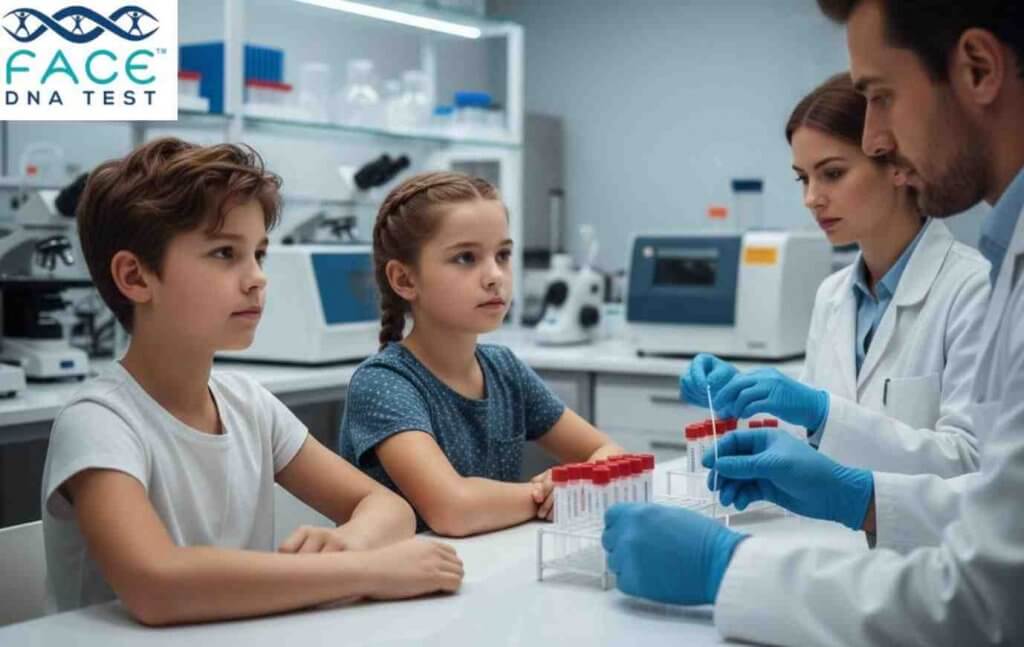
On average, full siblings with the same mother and father have 50% similar DNA. This implies that one-half of your genetic material is similar to the genetic material of your sibling. Nevertheless, due to natural variation in genetic recombination, it can range from about 37 percent to 61 percent, with an average around 50 percent. This scientific estimate can also be confirmed through sibling DNA testing in laboratories like Face DNA Test, which provides precise measurement and professional counseling. Professional relationship DNA testing can give unequivocal results when a family requires testing of relationships. These results are reviewed by licensed genetic counselors to enable families to know the implications of the numbers for them in a particular situation.
Mean Percentage of Shared DNA
The percentage of DNA shared by most full siblings is around 50, though it can vary from roughly 37 to 61. Just imagine it was half a deck of cards, you would each take half. This 50% average is the one that genetic scientists generally expect when comparing brothers and sisters with the same parents.
Why the Exact Amount Can Vary
- Every child is randomly given a blend of the DNA of each parent.
- The process of shuffling also varies with each kid.
- There are more similar combinations that may be inherited in some cases by some siblings by chance.
- The genetic recombination forms various patterns in every individual.
- None of the two siblings (except identical twins) receives precisely the same DNA fragments.
What is the difference between shared DNA in full, half- and step-siblings?
Full siblings generally share about half of their DNA because both parents are common to them. Half-siblings have a genetic relationship of about 25 percent due to the fact that they have one common parent. Step-siblings do not have any common DNA as they have no biological parents. These variations are significant where sibling DNA testing is required by law or personal considerations by the families. The relationship DNA tests provided by Face DNA can easily confirm these various relationships of siblings. Professional testing provides the family with accurate answers they can rely on.
Relationship Percentages of DNA.
Full siblings have about fifty percent of their DNA on average, as they receive DNA from the same two parents. The relationship between half-siblings is roughly 25% because they are linked by a single parent. Step-siblings usually have no shared DNA, similar to unrelated individuals, unless there is a separate biological connection.
The meaning of these Differences in Testing.
This knowledge of these percentages assists the laboratories in establishing relationships. When Face DNA undertakes sibling DNA testing, the proportion of shared DNA informs us of the kind of sibling relationship to be had. This information can be used to answer questions of inheritance, family reunification, or just to gain a better knowledge of family relationships.
Why do siblings not have the same DNA, despite having common parents?
DNA is not identical in siblings due to a process called genetic recombination. When parents create eggs or sperm, the DNA strands become shuffled and mixed together like cards in a deck. Both children receive an entirely different set of cards. This is a random shuffling that occurs during the formation of eggs and sperm, and that is why each sibling is a unique one. The identical twins have 100 percent DNA similarity since they were conceived by one fertilized egg. Relationship DNA testing has the capability of establishing the relationship between siblings, whether they are identical twins, full siblings, or half-siblings, depending on the extent of shared DNA.
Role of DNA Testing
- The DNA of parents is shuffled and transmitted to children.
- All eggs and sperm have a distinct mixture of genetic material.
- During the recombination, chromosomes exchange fragments.
- Such a combination forms billions of potential genetic combinations.
- Through this process, each child is given a unique genetic blueprint.

Conclusion
You want to know your family history, or just know whether you are married to a brother or a relative, professional DNA testing can give you a definite answer. All test results are checked by the licensed genetic professionals who can assist in explaining the meaning of your DNA percentages in your particular family case.
Face DNA Test is the company that does relationship verification testing that can be relied on by the families. Our sibling DNA testing is an advanced genetic test that is used to determine the shared DNA with high precision. We know that DNA questions are personal and even confusing; that is why our staff is ready to take you through the procedure with understanding and professionalism.