A DNA paternity test requires a biological sample from the child, the alleged father, and optionally the mother and in most cases, a simple cheek swab is all that is needed. Well that’s good news. No needles, no trips to the hospital, no complex processes. The sample collection is easy, non-invasive, and in real life. This blog gives you the details on which samples work and why some methods are preferred, as well as special situations (such as prenatal testing).
What Types of Samples Can Be Used for a DNA Paternity Test?
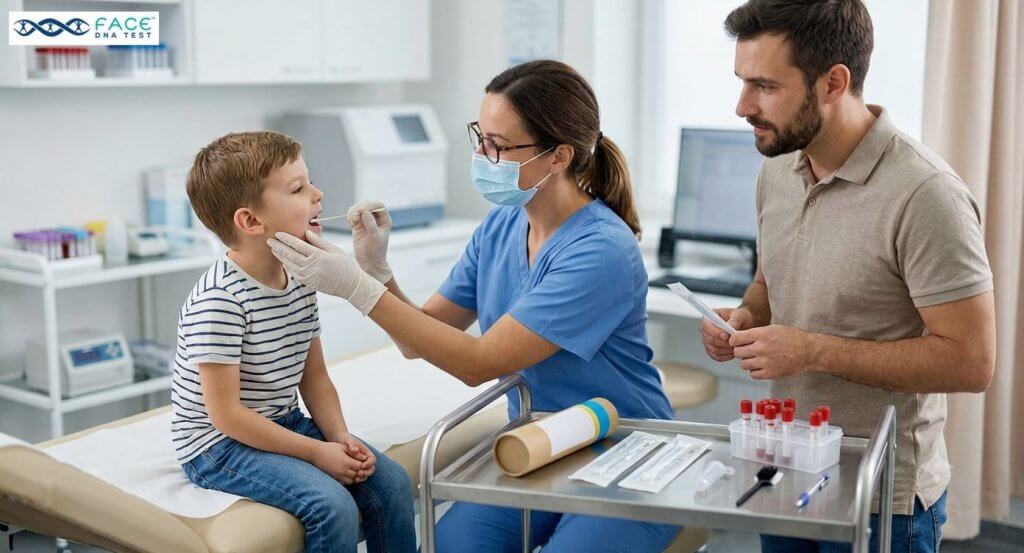
The most commonly used sample is a buccal swab for a DNA paternity test a soft cotton swab rubbed gently along the inside of the cheek. Simple, painless and reliable DNA for laboratory testing. In case the standard sample type is not available, several other sample types may be used.
Common and Alternative Sources of DNA
- A buccal swab, which is easy to collect, non-invasive and reliable when properly processed, is the gold standard for collection of DNA for paternity testing.
- Saliva sample DNA testing is very similar to buccal swabs and yields enough genetic material for typical analysis.
- Cheek swabs are accepted except when they are not available, in which case blood samples, hair follicles, fingernail clippings or umbilical cord blood are accepted.
- Non-invasive prenatal paternity testing is done by taking the prenatal samples such as maternal blood.
Why are cheek swab samples the most common method for paternity testing?
The main reason for the use of the cheek swab is that it is non-invasive and is easily collected properly and yields good quality DNA for laboratory analysis. The answer to why a buccal swab for a DNA paternity test is used to collect a sample is that the lining of the inner cheek is lined with cells that contain a full copy of the genome, the complete DNA of a person, which is the same as that found in blood.
Simple Collection and High Accuracy
The cheek swab DNA sample collection method from individuals takes less than a minute and does not involve any medical expertise or equipment. Buccal cells, which are collected, contain complete nuclear DNA that is similar to blood in genetic material. This renders the buccal swab for DNA paternity test to be the easiest, most available and scientifically best method of collection for routine paternity testing.
Is there a possibility of using blood, saliva, hair or other non-standard samples for paternity testing?
Yes, if normal cheek swab collection is not possible, blood, saliva, hair with intact follicles, finger nail clippings and umbilical cord blood can all be used for paternity testing. A cheek swab DNA test is as accurate as a blood sample DNA test when done in an accredited lab. The main difference in blood sample vs cheek swab DNA test is convenience (cheek swabs do not need medical assistance and blood draws do). Non-standard samples are generally collected under special conditions, in a forensic case, or when the standard collection technique cannot be conducted.
What samples are needed to make a prenatal DNA paternity test?
The samples needed for prenatal paternity testing are different than the samples required for postnatal paternity testing since the child hasn’t been born yet. The methods used are dependent upon the stage of the pregnancy and the method that is chosen.
Methods for collecting maternal blood and alleged father samples
- In non-invasive prenatal paternity testing, the mother’s blood stream is sampled at 7 weeks gestation or later in pregnancy and the blood contains cell-free fetal DNA that is used to build the baby’s DNA profile to compare with the father’s DNA profile.
- The alleged father is also required to give a standard buccal swab that is collected through the same cheek swab DNA sample collection process performed in the postnatal test, which is simple, non-invasive, and takes less than a few minutes.
- For parents who have inquired about the possibility of having a DNA paternity test for newborn child, the procedure is safe and gentle for newborns and can be performed soon after birth, which allows for easy and early testing.
Face DNA Test offers NIPP testing, paternity DNA testing and professional DNA testing services via CLIA accredited laboratory partnerships that employ strict collection protocols, contamination controls, and documented chain-of-custody for each case. For those who think about how to collect a DNA sample at home, an at-home DNA paternity test kit for their own reasons or for results that can be used in court, the processing of your samples is crucial to ensure accurate results and scientifically sound procedures.
Conclusion
It is important to have a correct sample to get a correct paternity result. It could be a swab of the cheek, a blood sample, or a maternal blood sample taken during pregnancy; the method of collection should be appropriate to the situation, and the laboratory that receives the sample should be professionally accredited to process it. Face DNA Test is designed on that very concept. Have professional help, follow the collection process properly, and rely on the results of a laboratory that values every sample.