
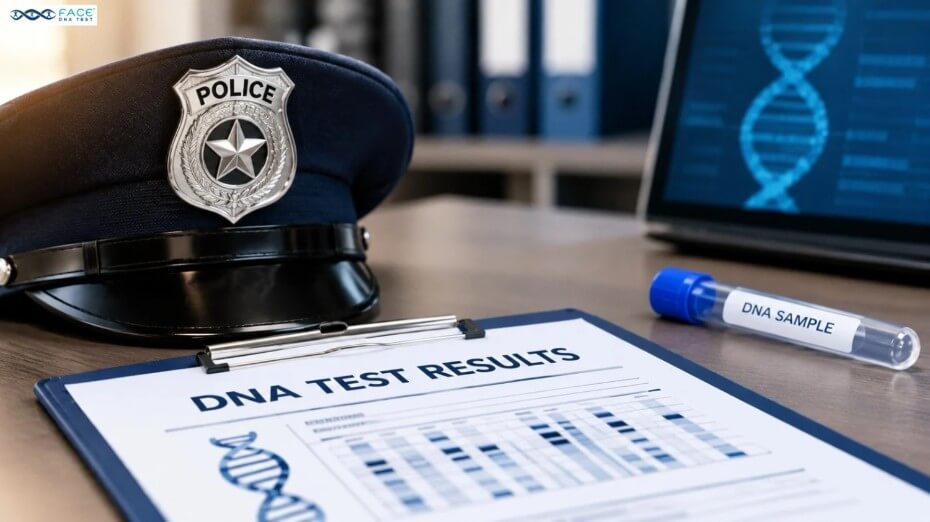

DNA test results contain personal family data, thereby a lot of individuals desire to know who can view it. This blog gives you the insight into what these DNA tests tell you and how the companies will store your results. It outlines the processes of warrants, subpoenas and court orders, and when police can get your DNA test results during a criminal investigation. It also includes a discussion about consumer DNA testing, company privacy policies, genetic genealogy, and paternity vs. criminal cases.
What does a DNA test tell you, and how is DNA test results stored?
A DNA test decodes a small piece of your DNA. It may reveal familial lineal relationships or a match between two individuals, depending on the test. Typically, results are stored as a digital file including your name, sample number and a report. Records, also, are maintained in the laboratories indicating who handled the specimen and when. These files are kept secure by good companies by placing efficient computer systems, restricting the access of staff members and setting passwords on these files so that only an approved individual can open it. A few facilities even remove names from the test data along with this, providing added protection. Retention periods vary, so it would be helpful to ask just how long your records are kept on file.
Knowing what DNA Profiles, genetic data, and lab records are.
A DNA profile consists of a brief string of markers that are used for matching. The bigger set of data a lab may read is genetic data. Laboratory records are maintained for each step from collection to report. Items are stored for different reasons and businesses may hold onto them for varying time periods.
Is it legally possible for Law Enforcement to get DNA Test Results from a Private Testing Company?
Yes in most instances, law enforcement can request records from a private company but they normally must have legal permission to do so. A company isn’t just giving away files to just anybody who asks. Typically, police need to appear before a judge or go through a formal procedure. A lot of companies state that they consider every request and some might contest a request that appears too wide. A judge can also “limit” a request to just what’s necessary in one case. That’s why individuals often wonder, why can police get my DNA test results? It depends on the law, the request, and the rules of the company.
Legal Requests, Warrants and Court Orders
- A warrant is issued by a judge and specifies what police can take.
- A subpoena is a formal request for records, which is usually examined by a company’s attorney.
- There may be specific information a company is required to provide in a court order.
- There are no universal rules as requirements vary from state to state and case to case, and a lawyer will be able to explain local rules.
When might the police ask for DNA records in a criminal investigation?
When police are attempting to find out who was at a crime scene or who is involved in a case, DNA records may be requested. This is frequently the case if there is biological evidence, but no suspect. They also can request records to verify an individual’s identity or to exclude an individual. The majority of requests are to a certain person or case. Courts can restrict the information that’s shared and a request does not necessarily mean the company has to give up everything it has. Some cases, too, may start with other evidence and the DNA evidence is only used if investigators think they can assist.
How Biological Evidence can Link Suspects, Victim and Crime Scenes
DNA can also be found on the biological evidence including skin cells and hair. Investigators cross-refer with known DNA samples. A match may link a person to a place or object. A non-match can also be beneficial, as it can indicate that a person was not even involved with the case.
Can police access the results of the at-home ancestry or family relationship tests?
This will depend on the company and the settings you select. Some companies state that they will only release records if there is appropriate legal process. Some let investigators search and others let users opt in to matching. Policies vary, so it’s important to read the fine print before testing. This is part of DNA test privacy; you choose what you want to share with others, but only when you understand what you are sharing. If you’re not sure, pose a direct question to the company and retain the written response. A test with one company does not mean that the results will be placed in other databases.
Consumer DNA databases vs criminal DNA databases
- Consumer databases are for participations provided by people for purposes of ancestry and family matching, while each firm determines its rules for sharing which its clients have to check before starting or selecting any matching alternatives.
- Criminal databases accumulate profiles through the justice system and follow the government’s rules in terms of who can add, search for or delete records making them much different compared to the consumer databases.
Does a DNA Testing Company Have to Notify Customers Before Sharing Their Genetic Information With Law Enforcement?
Not always. Some firms guarantee to inform customers when the law requires it. There are instances when others cannot inform the customer due to a court order that calls for keeping the information confidential. This is why it’s important to read DNA data sharing policies before ordering a test. Use clear language with requests for legal, notice or deletion. A transparency report is helpful, as it allows customers to understand how frequently requests are made and what was done with them; companies that publish transparency reports do this. If it’s unclear, request that the company clarify it in writing before you provide a sample.
Data Privacy Policies, Disclosure Practices and Customer Notices
- Read the DNA privacy policy in order to get clear legal requests.
- Look for one that notifies customers and how.
- Search to remove your results or stored sample.
- Ask the question of the length of record retention before taking the test.
- Inquire if results are communicated with partners or researchers.
- Keep a copy of the policy you agree with.
Can law enforcement identify a suspect through a DNA match with family members?
Yes, this is possible. Genetic genealogy is the comparison of a crime scene DNA profile with a DNA profile in a database that can be used for this type of comparison. Investigators can make a family tree and determine who may be the source of the match if one exists from a close or distant relative. This could come into play if you never agreed to anything, as other family ties may be exposed. This may come as a shock to many, so it’s good to have a discussion with family members before testing. There are also some databases that allow you to disable this type of matching, so that you have an option.
How Connections with Family Can Create Investigative Leads
A match cannot refer to a person alone. It indicates that two individuals have DNA in common. Investigators then search the records, ages, and family trees for possibilities. There is still a need for additional evidence on each of the leads, as mere familial connection is not enough to establish who was at a scene.
What is the difference in the handling of DNA records for paternity cases and criminal investigations?
Paternity testing helps solve a family problem and criminal testing helps determine the connection between evidence and a person or event. The question of “how long does a DNA test take to get results and are paternity test results public records” is one that many people ask. Private paternity results are not public, though if the results are used in court, they may be made public, as part of the court documents. The rules that govern access vary from state to state and a court may prescribe special rules when a test is employed in a legal case. Face DNA Test collaborates with certified laboratory partners to offer services of DNA paternity testing and NIPP test services, with clear instructions and privacy information.
Differences in Testing Purposes: Access and standards for the evidence.
- Paternity tests are used to determine if two people (father and child) are related and there are typically no objections to the tests.
- Criminal testing matches up unknown samples to known ones.
- Special collection procedures may be required by the courts where results will be used as evidence.
- Access rights vary based on consent, court orders, or the intent for testing and can be treated in a very different manner with the same sample.
Before Testing, Protect Your Privacy
The two most common DNA privacy-related habits are: asking before testing and obtaining informed consent. Inquire about who is responsible for saving the results, how long they are retained, and when the results can be released. Look for a provider that provides clear information on these steps. In the case of paternity issues, a licensed expert can clarify the meaning of your report. Seek legal advice if you have a legal issue – no two situations are the same. This article should not be construed as legal advice, and laws may change, so please check the current rules in your state.

Conclusion
There are times when law enforcement can retrieve DNA test results, typically through legal proceedings, and the process varies based on the company, the test type and state. Discussing privacy policies, legal requests, keeping copies of acceptable terms and discussing with family members before you test can help you make safer choices. For legal DNA and relationship DNA testing, Face DNA Test provides you with clear guidance so you can test on a more confident level, and know how your results will be handled in the process.