


Maybe you met someone who says you share a grandparent. Perhaps there was never a family tale that was complete. A cousin DNA test examines the codes in your cells to determine if two individuals are related through the same family line. We’re a group of professionals who interact with DNA on a daily basis and we understand how these family questions can be daunting. So we keep it simple and clear. The first question they ask is “Can You Find Relatives Through DNA Testing? ” and this question leads many to cousin testing. This blog will explore what exactly a cousin relationship DNA test is, how it works, which cousins can be tested, and how much DNA cousins have. Let’s journey together on your family tree!
What is a cousin DNA test and what sort of Biological Relationship is it looking for?
A cousin DNA test is a type of biological relationship test that compares the DNA of two individuals who think they might be cousins. At least one set of cousins has at least one pair of grandparents or great-grandparents in common. So the test is looking specifically for DNA that the individual has received from those common ancestors. It’s a kind of DNA relationship testing that’s commonly conducted when a parent or grandparent isn’t available for testing. It can help to determine if two people are truly of the same extended biological family.
Why do individuals use cousin testing?
Some are interested in learning about family history. Some others were adopted and are looking for a family. Some require proof for a legal purpose, e.g., for inheritance or immigration. There are two types of legal cases: those where the sample must be collected under supervision, and those where it can be collected at home without supervision for peace of mind.
When performing a cousin DNA Test, how can it tell if two individuals have a Biological Family Relationship?
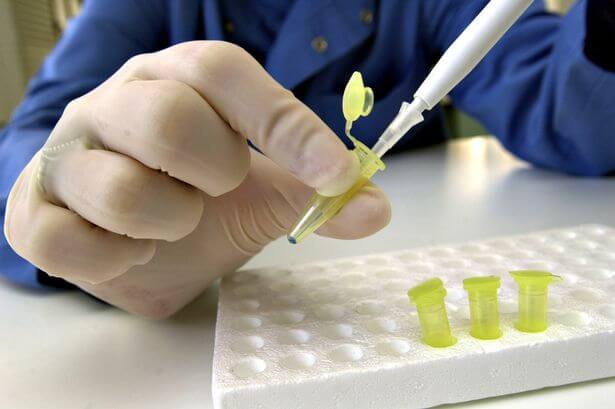
The principle behind a cousin DNA test is to compare markers, which are small pieces of DNA. Everyone’s cheek is swabbed and the lab reads both cheek samples. Then scientists compare the number of matches. Up to 96% of family members have more matching markers than strangers. The lab examines whether the people are related or not with mathematics. The final report then provides a clear number indicating the idea that is backed up more strongly by the DNA.
How Cousin DNA Testing Works
- Relationship index: If it is greater than 1, it’s a family link; if it’s less than 1, it’s not.
- If they are not related to a relative, add a known aunt, uncle, or grandparent: This will enhance results.
- Y-DNA testing: Checks the father’s line when both people are male.
- Mitochondrial DNA testing: Checks the mother’s line for any person.
- Experts have been trained to review each final report by an accredited lab before it is released.
Which cousin Relationships are Possible to be investigated by DNA Testing?
There are several types of cousin relationships that can be examined using DNA. First cousins have the same grandparents. Second cousins share 2 sets of great-grandparents. Third cousins are persons who have shared great-great-grandparents. “Removed” cousins can also be tested and, for example, a parent’s cousin can be considered a “removed” cousin. Half cousins have one grandparent in common, not two. Double cousins are the people who are cousins by marriage. If your question is more toward DNA Testing for Siblings: When and Why You Should Get Tested , a sibling test may be more appropriate, as it’s another type of DNA Testing for Family Members.
What percentage of DNA do Biological cousins share and why is it important for Testing Purposes?
The average amount of DNA shared by a biological first cousin is approximately 12.5% of their DNA. Second cousins share approximately 3% of their genes and third cousins share less than 1%. The greater the distance between the cousins the less DNA they share. It is important because there must be sufficient shared DNA to distinguish between cousins and strangers in the lab. The best results are found with first cousins. Ancestry results can be less certain with distant cousins, due to the small amount of DNA that might be shared. Even among distant relatives, there are some who don’t share any measurable DNA.
Common Ancestry with Cousins
DNA is inherited randomly, and first cousins may inherit more or less than the average. Seek professional assistance to gain insight into these numbers. Families can use Face DNA Test for biological relationship testing, including DNA paternity and other DNA tests via CAP-accredited partner labs.
Conclusion
Is a cousin DNA test a valid proof of cousinship? Yes, in many cases, particularly when it comes to close cousins. The results are based on the relationship between the participants and the test and depend on the participants. Have clear and careful answers provided by professionals.