
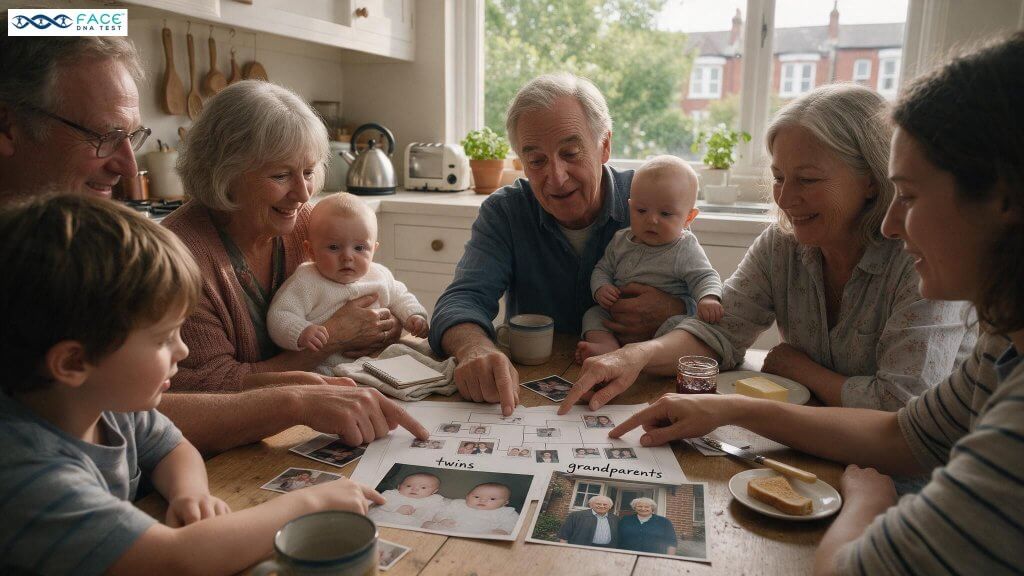

While there is a common misconception that twins skip a generation, this phenomenon does not actually occur; twins simply do not occur in every generation in every family. The notion of skipping a generation applies more to folklore than it does to genetics, which operates more like a skip-a-jump pattern. This blog details what this myth is and discusses how the chance of twins is actually influenced by genetics, and whether it is possible to inherit a twinning risk from a parent or pass it on through a family line.
Do twins skip one generation and appear in the second one?
There is no such thing as “skipping a generation” in twins, although it has been said for years that it’s a rule. This is probably because the do twinning gene may be passed down without showing up generation by generation. A grandmother could have twins, her daughter could not, and the granddaughter could have twins, and it would seem that the characteristic has skipped a generation. This is not the same pattern of genetics in reality, as the answer to the question “do twins skip a generation and then alternate from one generation to the next? is no.
The truth about twins skipping a generation
Twinning genes may be passed along silently and not be expressed generation after generation, as if it were skipped. Genetics does not really have a sequence of predictable generations from one generation to the next.
Why do twins sometimes appear to run in families?
There are some genetic factors associated with fraternal twinning that can be inherited from generation to generation, especially in the female line, so that twins may seem to have a genetic link within families. These genes affect the number of eggs a woman releases during ovulation, thus making it more likely that there will be fraternal twins. But do identical twins have a similar type of genetic makeup? No, because identical twins are formed from one single fertilized egg that splits randomly, and this splitting seems to be more predictable when it comes to fraternal twinning.
Family history and twin genetics.
- Genes that one inherits from the mother that cause fraternal twinning.
- Genes that affect multiple egg release during the ovulation cycles.
- Families with multiple twins over a number of generations.
- Identical twins being more randomly distributed, not influenced by genes.
What are the genes involved in the possibility of twins?
Genetics have some significance in the risk of fraternal twins, mostly affecting genes that affect hyperovulation (the release of more than one egg per cycle). Women with these genetic traits might be more likely to have fraternal twins than women who don’t have these traits. Other factors such as overall family history, fertility treatments and age can also play a role in twin probability. Why do identical twins have same DNA? with identical twins, there is one reason why they behave differently genetically: They are derived from a single fertilised egg, not two.
Genetics and the probability of twins.
The genes associated with hyperovulation are the major contributors to the genetic component of fraternal twinning. Identical twins develop differently – not because of any genetic predisposition but through random egg splitting.
Is it possible to inherit the tendency to have twins?
Yes, the tendency to fraternal twins can be passed down through the family, especially from the mother. These genes influence the hormones that trigger ovulation and boost the risk of releasing more than one egg. This predisposition does not mean that twins will always happen, but it does appear to increase the likelihood of having twins compared to a family that doesn’t have this history. Identical twins are not hereditary in this manner, however, because they do not rely on a trait like fraternal twinning, but rather on the splitting of the egg.
Fraternal Twins are caused by inherited factors.
- Multiple releases of eggs and hyperovulation associated maternal genes.
- Twins have a higher chance of developing a disease if another member of their family had it.
- Genetic factors affecting ovulation patterns that are related to hormones
- Overall, identical twinning is essentially random and non-hereditary.
Interested in knowing the personal family history? With ancestry DNA testing and family pattern DNA testing to explore inherited traits and patterns, Face DNA Test also provides paternity DNA testing and relationship testing services, processed by CAP-accredited laboratories for accurate and reliable results. Whether you are interested in the facts of twins in your family or any other inherited characteristic, Face DNA Test delivers answers you can trust, based on professional lab standards.
Conclusion
Although fraternal twins do not truly skip a generation, their family trees can appear that way when there is an inherited gene for fraternal twinning. The chances of having twins, particularly fraternal twins are a reality of genetics. At Face DNA Test you can use ancestry, paternity and relationship DNA testing services, at CAP-accredited labs, to uncover the untold genetic history of your family.