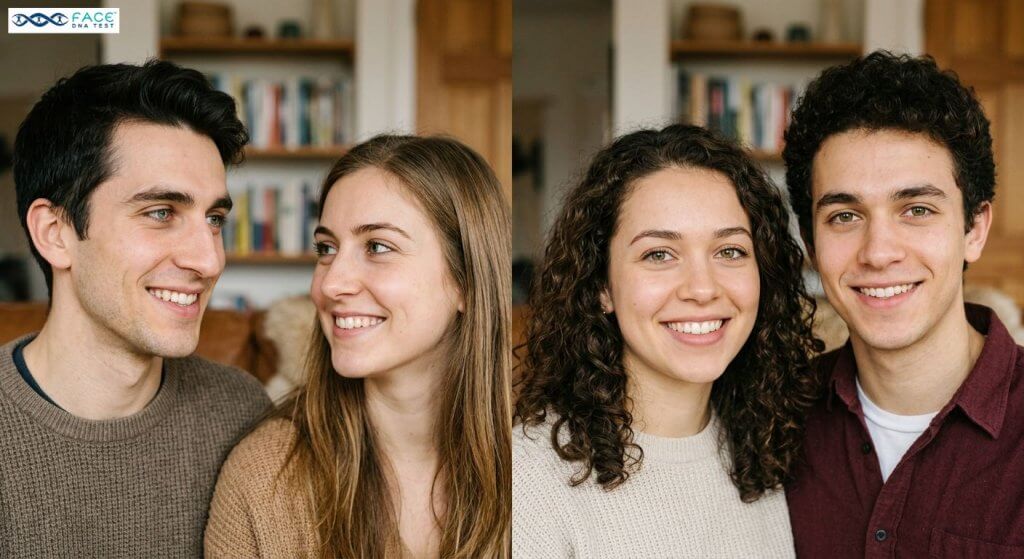
Brothers and sisters have genetic material of the same biological parents and this genetic material is usually show incredible similarities in facial features of the siblings. Modern facial recognition technology is now bringing such an observation to a whole new level, providing families with a visual, data-driven means of discovering biological ties. And we may go through what it does and what it finds and what it can and cannot say to you.
Is Facial Feature Comparison an Effective Way to Find Out Sibling Relationships?
Yes, facial feature comparison is a very practical instrument to understand possible sibling relationships. Brothers and sisters are genetic mixtures of parents, and these genetic mixtures often have similar facial features, which are identifiable and quantifiable by deep learning face recognition with a statistically significant degree of accuracy. Facial comparison represents a strong visual layer of evidence that reinforces and contextualizes genetic evidence to families seeking answers.
The Genetic Relations in the Facial Similarities.
- The presence of similar genes among siblings has a direct effect on the formation of bone structure, the distribution of soft tissues and proportions of faces that form recognizable similarities that can be detected using ethnic facial feature comparison tools among individuals of various face shapes.
- Deep learning face recognition is able to identify inherited structural information in faces that are not visible to the naked eye – such as subtle matches of symmetry, proportionality between facial landmarks inherited through common ancestry.
- Distinct characteristics that have been inherited by the same biological parents including a particular nose bridge shape, or the angle of the jawline, and so on, are always similar in all siblings and can be used as a sure sign of facial recognition comparison technology.
What Facial Features do siblings share the most?
Siblings do not necessarily share the same looks but some facial characteristics are more genetic than others and thus more likely to be shared by biological brothers and sisters. Knowledge of the strongest genetic signal bearing features can be useful in explaining why some siblings resemble each other closely whereas other siblings with the same parents are radically different even though they share about 50% of their genetic material.
Eyes, Nose, Jawline, and Other Important Traits.
Other features of the face that are highly genetically determined and often very similar between siblings are the eyes and their shape, the distance between them and the depth of the orbital socket.
Nose structure, such as the bridge height, width and tip shape are also very much heritable and shared.
The shape of the jawline and chin is directly related to the underlying bone structure which is genetically determined and therefore is one of the most consistent features of ethnically based comparison of facial features cross ethnicities and face shape.
Ear shape, brow ridge prominence, and the general proportionality of facial thirds are other inherited features that deep learning face analysis considers when comparing possible siblings with facial recognition technology.
What is the Comparison of Facial Recognition Technology against features of Siblings?
This is the face of science and innovation. The current face recognition software is much more than a mere glance at some photos. Facial recognition technology employs state of the art analysis models to develop an accurate, data based analysis of facial formations of two persons under assessment as possible siblings.
Artificial Intelligence (AI)-Based Analysis and Pattern Detection.
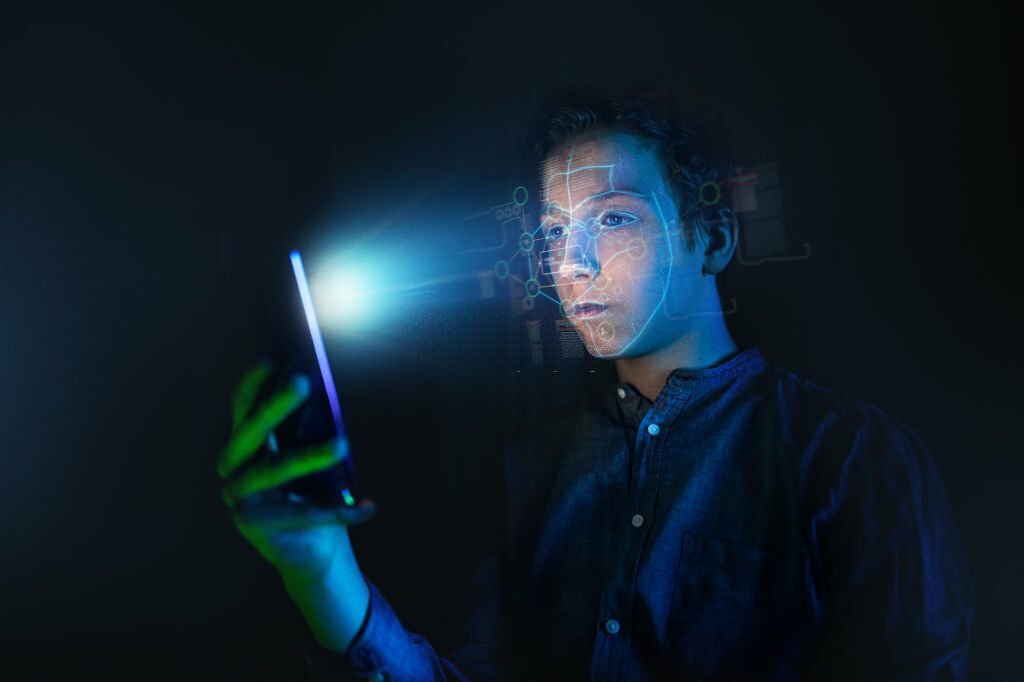
The facial recognition technology operates by mapping hundreds of discrete facial landmark features on the face of each subject the exact position of corners of the eyes, bridge of the nose, and lips, jaw, and the location of the brows. They are then processed through deep learning face analysis algorithms that are trained to detect inherited structural patterns that are in line with biological relatedness. The system does not only analyze isolated individual unique features but the geometric relation of multiple facial points at the same time this is where inherited patterns are most identifiable. The outcome is a more detailed report of facial similarity that quantifies the amount of structural similarity between two people and which of the specific unique features indicates common biological parentage.
The extent to which Facial Feature Comparison is Accurate in the determination of Sibling Relationships?
Sibling comparison is a potent and indeed useful tool of analysis provided by facial recognition technology but a clear appreciation of its weaknesses and strengths provide you with the best possible understanding of what it can provide in your particular case.
Limitations in comparison to DNA Testing.
- Facial feature comparison determines structural similarities in accordance with common lineage but environmental variations, age disparities and natural genetic variations in various face shapes.
- The two siblings who receive quite different sets of genes of their parents can be not so similar on their faces, even though they are biological relatives.
- Facial feature matching based on ethnicity is an important addition to the analysis but cannot rule out the possibility of similarity between unrelated individuals of the same ethnicity who may share certain unique features by chance, instead of being biologically related.
- Facial recognition technology offers very strong supportive evidence and a useful visual aspect to relationship examination but it works best as an addition to DNA kinship testing than as a verification of biological siblinghood.
Conclusion
Facial recognition technology will provide you with the visual and biological data to make sure conclusions when you want the complete picture of a potential sibling relationship. Face DNA provides advanced facial recognition testing technology and extensive relationship DNA testing services that provide a family with an unprecedented integrated service to analyze biological relationships. By using the services of Face DNA, you can find and use a skilled team of professionals to explore your family ties with certainty, precision, and reliability.