
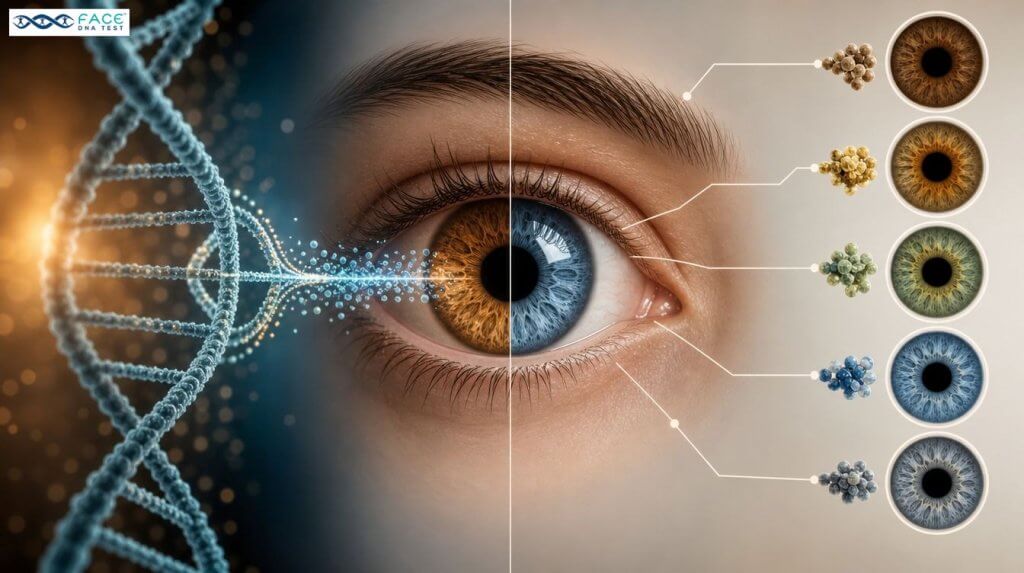

An eye color is determined by the amount of pigment (melanin) that is produced in the colored portion of the eye, which gives it a shade of brown, blue, green, or hazel. It’s surprising to many that there actually are a lot of genes involved in this process because eye color isn’t just a single gene. The complexity is a key reason genetics is an interesting and intriguing field of study, particularly in families. Finally, in a very easy-to-follow and fun-to-understand way, let’s get into how eye color is inherited, why kids get crazy eye colors, and the science behind it.
How do genes determine the colour of one’s eyes, Brown, Blue, Green or Hazel?
Genes that determine eye color affect the amount of melanin produced by the iris; more melanin means a darker eye color, less melanin means a lighter eye color. Eye color (like most traits) is under the control of several genes and so the colour of the eyes is not strictly determined in the way that a simple genetics diagram is.
Understanding Eye Color Genetics
Unlike many genes in humans, which can only be either inherited or absent, eye colour is determined by a combination of genes and is more of a blend than a simple either/or situation most people would expect. For this reason, eye color prediction is more challenging than one might think, even for the trained geneticist.
How are eye color genes passed on to children by parents?
Eye color genes are not just inherited from one side of the family; rather, they are a blend of inherited genetic variants from both parents. With two or more genes involved, there is a wide range of possibilities when it comes to the inheritance of eye color, even for children who grow up in the same family and household.
Inheritance of Eye Color
- The gene for eye color is passed on by both parents in multiple gene contributions.
- Genes pair in very strange and unpredictable combinations.
- Usually the darker eye color genes seem to be dominant.
- Despite being mixed, lighter colors may still appear
- It is largely due to environmental factors
Is it possible for a child to inherit a different eye colour from both the mother and the father?
Yes, a child can definitely have a different eye colour from both parents because eye colour is not a 100 percent predictable pattern, as most people tend to believe. This is one of the many reasons why families are sometimes surprised by their genes: it’s because sometimes the genes that determine eye color can be passed on from previous generations that are not directly in the line of ancestry.
Eye color variation in families
- Recessive genes may not pass to the next generation.
- Unexpected combinations of multiple genes are made.
- Grandparents can also affect the child’s eye color.
- Your baby’s eye color may change a bit during infancy.
- The truth is that real eyes are fixed in early childhood.
What makes siblings different yet have different eye colors when they’re the same family?
Like other physical characteristics such as height or hair texture, siblings can vary in eye color since they each receive a different eye color from their parents at conception. This natural variation of the genes between siblings accounts for the different eye colors that can develop between siblings over time, even if they are full biological siblings.
Genetic differences among siblings.
Natural variation in characteristics such as eye color, hair, and height is caused by the different combinations of genes that every child has – even those born from the same two parents. Randomness is a natural part of nature and not indicative of any unusual aspect to a family’s biological connections or heritage.
How DNA testing can help produce a curiosity that comes with clarity.
While learning about eye color inheritance can be a fun introduction to genetics, there are a number of families with more complex biological questions, beyond just eye color. When families want clarity at a meaningful or special time, they tend to ask about eye colour test procedure for proving paternity, though modern paternity testing relies on far more precise genetic markers than eye color alone, since appearance-based methods are not scientifically reliable. However, some are more eager about How long does a DNA test take to get results? Face DNA Test has a network of CAP-accredited laboratories that provide paternity DNA testing results in 3 to 5 working days, allowing families to confidently, clearly, and expertly investigate these types of genetic questions.
Choose Our Eye Color Test.
Get Accurate Answers With our Eye color test!.
-
- Accurate
- Quick Result
- Private and Secure
- Affordable

Conclusion
Therefore, how do genes control your eye color? Melanin levels are determined by a combination of genes and is responsible for the variability in eye color among families and generations. Some even question the eye color test to establish paternity, although the test is not supported by scientific evidence, and today’s paternity testing is far more sophisticated than a mere look at the eyes. Face DNA Test helps families ask genetic questions with the assistance of trusted partners in the lab and accredited paternity and NIPP testing services.