
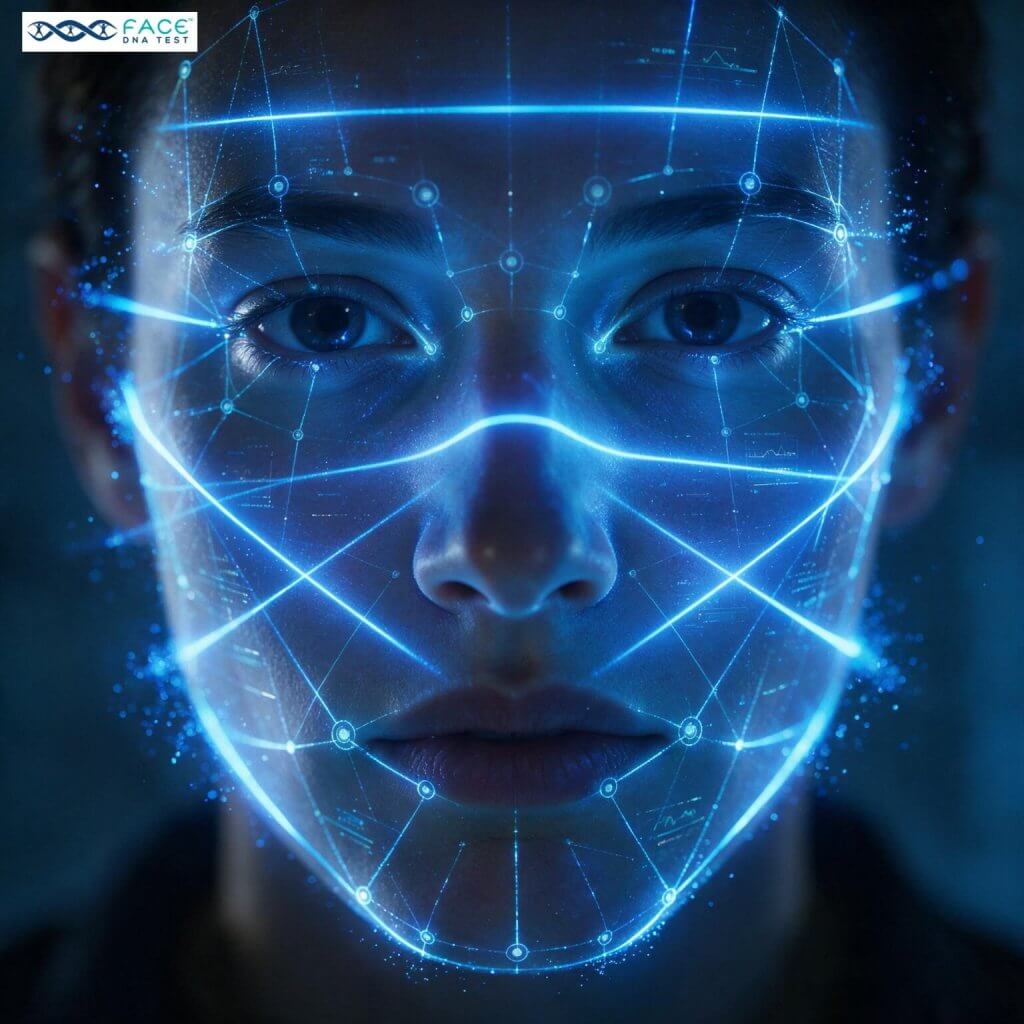

Facial recognition involves converting what the eye sees into a mathematical data set that allows for a detailed comparison, matching and measuring of the face’s structural features with other facial images with very high accuracy, using artificial intelligence. In what sense is the recognition being sought? It is a process by which a computer system determines a face by calculating and measuring particular points, distances, and proportions, which collectively constitute a unique facial signature for each person it analyses.
What is facial recognition technology?
Facial recognition technology is a biometric software that identifies relationships with analyzing facial features. Facial recognition technology maps the structural features of the face. It encodes the structural features into a mathematical profile and compares that profile against another image or a database to determine a match. So, how does facial recognition work? The whole process takes a few seconds and relies on machine learning algorithms trained on millions of faces, improving accuracy over time.
How AI Detects and Identifies Faces
- The first step in a facial recognition system is to identify the presence or absence of a face in an image, using the general shape of the face, skin tone patterns and typical proportions of the face compared to the background elements in the visual field.
- Once the face is identified, the AI identifies specific landmark points (eyes, nose, mouth, jaw, etc.) and measures the exact distances and angles between them and creates a unique mathematical facial profile.
- This mathematical profile is then compared to a second image or a database of stored images, producing a similarity score that shows the degree of match between the two facial profiles, when measured against all measured features and proportions.
What information does a facial recognition system use to identify a person’s face?
When using a facial recognition system, it doesn’t “look” at the face as a human would, it simply measures the points of the face. Each structural feature is assigned a number, and the resulting set of numbers forms a facial fingerprint that is unique and stable for every person, and consistent enough to match in a variety of images, lighting and angles.
Facial Landmarks, Measurements and Unique Features
What does recognition mean? A facial recognition system identifies dozens or hundreds of facial landmarks, such as the distance between the two eyes, the height of the nose bridge, the angle of the jawline, the width of the cheekbones, the shape of the lips, etc., and determines the distances between all the landmarks with a degree of accuracy. These measurements create a unique facial geometry profile which the AI uses to identify and compare images.
How does a facial recognition app match one face with another?
A facial recognition app works by comparing the faces by calculating the difference between two faces in terms of their landmark measurements, then comparing how the faces match, and returning a percentage-based similarity score. A higher score is more close to the face’s structural similarity to the other face, based on the AI’s measurement system.
Face Detection, Feature Extraction, and Similarity Matching
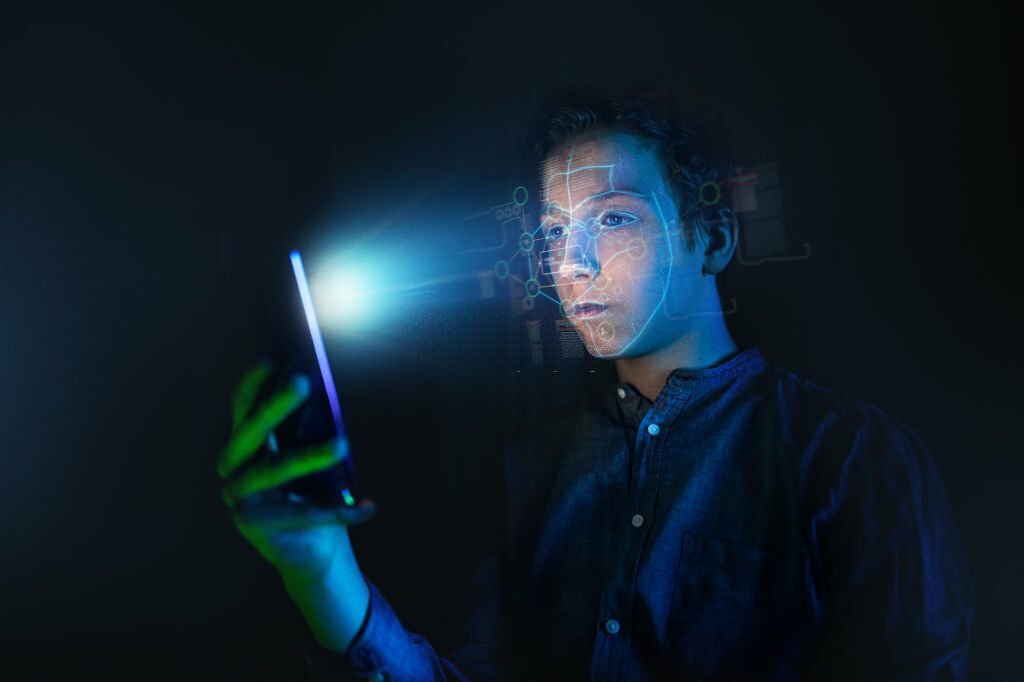
- In the analysis process there is a first step, which is face detection—this app is able to detect and isolate the face in each picture which is uploaded.
- The facial landmarks are then used to create a mathematical vector — a number-based representation of the face’s distinctive structural geometry at that moment in time — known as feature extraction.
- Similarity matching involves comparing the two mathematical vectors and computing an alignment score—how well the structural geometry of both faces aligns at each landmark point and across each proportional relationship.
- The similarity percentage gives the user an idea of how similar the two faces are in structure; the higher the percentage, the more similar the two facial structures that were analyzed on the two faces submitted for comparison.
Is it possible for Facial Recognition to detect the similarity of family members?
Yes, facial recognition can tell if two individuals are structurally similar to one another as a result of having shared DNA as this gives measurable overlaps in facial geometry. What does recognition have to do with family relations? It is not a genetic link, but an indicator of potential biological similarity based on shared structural features such as eye spacing, jaw shapes, nose profiles etc.
Examining Facial Similarity and possible biological relationship
A facial recognition system can identify structural similarities between two people, but not establish a biological relationship. The facial similarities between two individuals is measurable and can be captured by AI, but two strangers can also have similar facial geometry. DNA testing is the only scientifically accepted, accurate way to positively confirm parentage or family relationships.
Facial DNA Test is a facial similarity tool powered by facial recognition technology that can be used to compare two faces and output a structural similarity score, which is a reasonable starting point that can be used to meditate on family resemblance. Face DNA Test offers professional paternity DNA testing, NIPP testing, and DNA testing, partnering with a CLIA–accredited laboratory with complete chain-of-custody documentation for confirmed biological answers. Facial recognition questions the answer, and DNA testing provides the answer.
Conclusion
Facial recognition technology is useful, fast, and complex for the exploration of facial similarity, but it does not work with genetics. Face DNA Test provides professionally accredited DNA testing services based on scientifically accurate principles and results that can’t be denied. Seek out professional assistance and real solutions from real science.